
ROP treatment
- Introduction...
- 1. Indications of ...
- 2. Mechanism of la...
- 3. Laser procedure...
- 4. Post laser foll...
- 5. Current usage: ...
- 6. Limitations of ...
- 7. ROP surgery...
- 8. ROP surgery-01...
- 9. Key messages...
 |
 |
Introduction
DR. PARIJAT CHANDRA
MD, DNB (Ophthalmology)
Additional Professor (Ophthalmology)
Vitreoretina & ROP Services,
R.P. Centre, AIIMS, New Delhi
1. Indications of laser treatment
â–º Early Treatment of ROP (ETROP) guidelines
â–º Type I ROP - Treat
♦ Zone I, any stage with plus
♦ Zone I, stage 3 without plus
♦ Zone II, stage 2-3 with plus (Including APROP)
2. Mechanism of laser
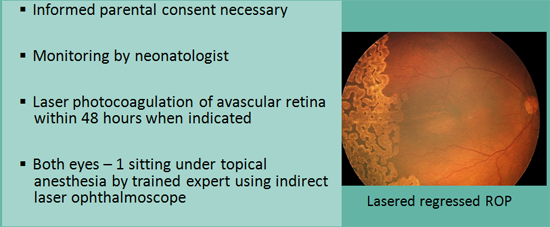
â–º Laser destroys avascular retina
â–º Removes ischemic stimulus
â–º Decrease neovascularization, fibrovascular proliferation
â–º Regression of ROP
3. Laser procedure
4. Post laser follow up
► Antibiotic/ steroid + tears eye drops TDS – 5 days
â–º Follow up 1 weekly to observe ROP progression/ regression
â–º Review for laser augmentation in skip areas
â–º Long term follow up 4 monthly for retinal status and refraction
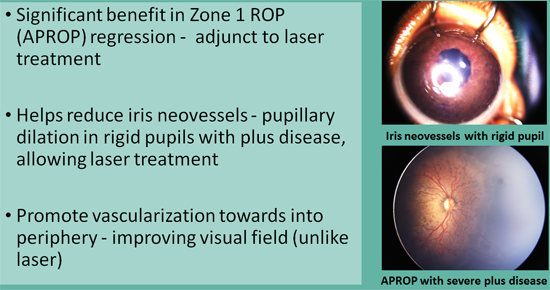
5. Current usage: Anti VEGF drugs
6. Limitations of anti VEGF drugs
â–º No clarity on dose/ number of injections
â–º No clarity on which anti VEGF drug is better
â–º Risk of systemic absorption and side effects
â–º No study on long term outcomes
â–º Delayed recurrences common
7. ROP surgery
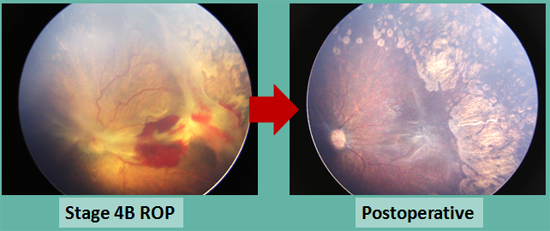
â–º Stage 4 ROP - Subtotal retinal detachment
â–º 25G/27G lens sparing vitreoretinal surgery - good outcomes
8. ROP surgery-01
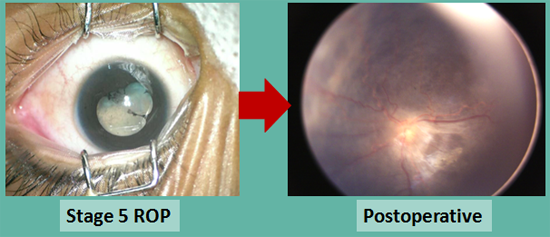
â–º Stage 5 ROP - Total retinal detachment - Poor prognosis
â–º Surgical trial in hope of restoring navigable vision in
bilateral cases
9. Key messages
â–º Laser treatment for ROP is effective and has good outcomes
â–º Anti VEGF drugs is useful in adjunct to laser in selected cases
â–º Surgery for ROP is useful in selected advanced cases, but
prognosis is poor in stage 5 ROP
â–º Timely ROP screening and treatment is a key to prevent ROP
blindness