
CPAP Maintenance and monitoring
- Introduction...
- 1. Maintenance and...
- 2. CPAP and FiO
- 3. CPAP...
- 4. Warming and hum...
- 5. Humidifier...
- 6. Monitoring...
- 7. Chest X-ray...
- 8. Adequacy of CPA...
- 9. Weaning...
- 10. Procedure afte...
- 11. Failure of CPA...
- 12. Reasons for fa...
- 13. Summary...
 |
 |
Introduction
DR. SRINIVAS MURKI
MD, DM (Neonatology)
Consultant Neonatologist
Fernandez Hospital
Hyderguda, Hyderabad
1. Maintenance and monitoring
â–º Flow
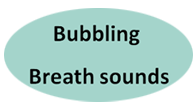
♦ Bubble minimal bubbling (2 to 7 liters/min)
♦ Ventilator 6 to 8 cms of water
â–º FiO2 (21% to 60 %) : SpO2 90% - 95%
â–º CPAP (4 to 7 cms) : Recessions/ CXR and SpO2
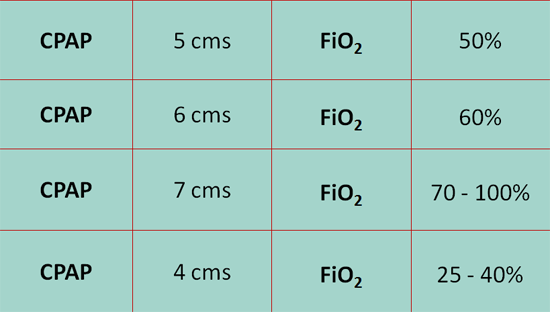
2. CPAP and FiO2: Proportionality
3. CPAP
â–º CPAP of < 4 cm H2O never given
â–º CPAP of 4-7 cm H2O is a good range
♦ Advantages many, disadvantages few!
â–º CPAP of > 7 cm H2O is a bad range
♦ Advantages some, disadvantages galore!
4. Warming and humidification
â–º Temperature of inspiratory gases at 37o C
â–º Relative humidity of 100%
â–º No condensation in the inspiratory circuit
â–º Some condensation in the expiratory limb
5. Humidifier

6. Monitoring
â–º Patient
♦ HR, RR, SAS score, SpO2, air entry and bubbling
♦ CFT, blood pressure, anterior fontannel, urine output,
abdominal girth
â–º Machine
♦ CPAP pressure, FiO2 and flow
♦ Water in humidifier, bubble chamber
♦ Condensation in circuit
â–º Interface
♦ Nasal injury, cap size, prong size, secretions
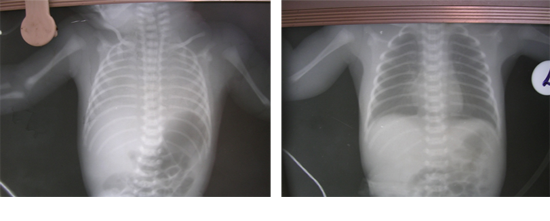
7. Chest X-ray
8. Adequacy of CPAP
â–º Satisfactory cardiorespiratory status
♦ Comfortable baby
♦ Minimal retraction, no grunt
♦ Normal capillary refill, BP
♦ Normal saturations: 90 - 94%
♦ Normal ABG
(PaO2: 60-80, PaCO2: 40-60, pH 7.35-7.45, BE±2)
9. Weaning
â–º Decrease FiO2 and then CPAP
â–º Every 1 cm decrease in CPAP, aim 10% in FiO2
â–º CPAP 5cm & FiO2 50%, maintain CPAP till FiO2 is 30%
â–º Decrease CPAP to 4 cm
â–º The disease process has improved
â–º Remove CPAP, if CPAP 4 cm & FiO2 < 30% & clinically well
(no RD, SpO2 > 90% & normal ABG)
10. Procedure after the CPAP
â–º Oral and nasal suction/ saline nebulization, if secretions
â–º Watch for apneas, tachypnea, retractions and bradycardia
â–º Frequent change in positions
11. Failure of CPAP
â–º Continuing retractions, grunt
â–º Recurrent apneas
â–º SpO2 <90 % & PaO2 < 50 : PEEP > 7 & FiO2 >60%
â–º PaCO2 > 55, poor respiratory efforts
â–º Baby not tolerating CPAP
12. Reasons for failure
â–º Failure of the CPAP system
â–º Worsening of baby
♦ Respiratory
♦ Cardiovascular
♦ Neurological
13. Summary
â–º Titration
♦ Flow Bubbling
♦ FiO2 SpO2
♦ CPAP Recessions/CXR
â–º Proportionality of FiO2 and CPAP
â–º Systematic evaluation: Failure of CPAP